Modern users don’t just scroll. They watch, listen, interact, and expect everything to happen instantly. That shift changed how mobile applications work. Today, people want seamless multimedia experiences in a single place. No switching apps. No friction. Just smooth interaction.
That’s exactly where application mobile dualmedia comes in.
This guide breaks everything down. You’ll learn how these apps work, why they matter, how to build one, and what it really takes to compete in today’s mobile environment. No fluff. Just practical insights you can use.
Why Application Mobile DualMedia Is Changing Mobile Apps
Open your phone right now. Think about how many apps you use for different media.
- One for videos
- Another for music
- Another for reading
- Another for chatting
That’s inefficient. Users feel it. Businesses feel it even more.
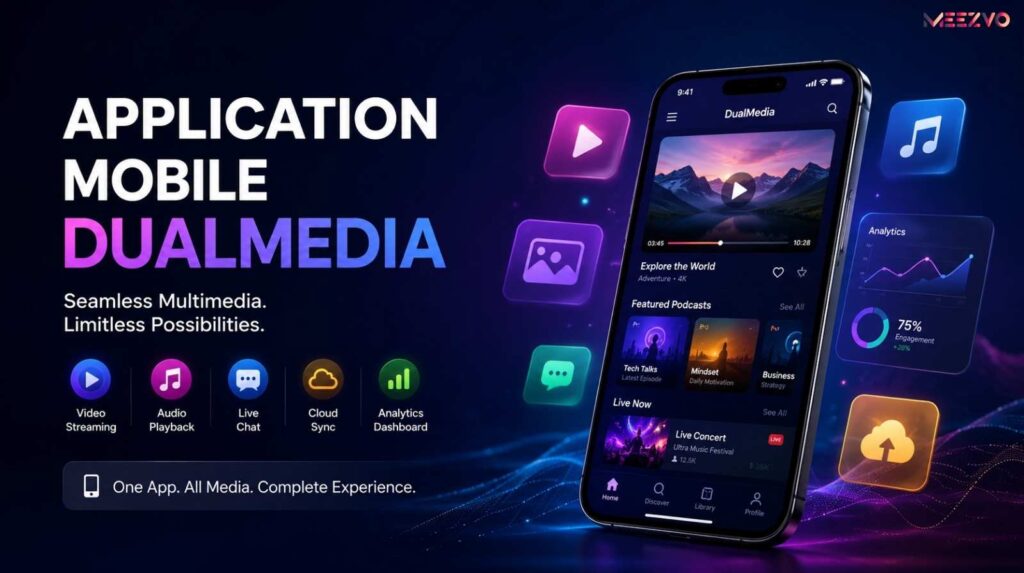
Application mobile dualmedia solves this problem by combining everything into a single interactive platform. It blends video audio, images text, and real-time interaction into one unified experience.
Think of it like this: Instead of carrying five tools, you carry one Swiss Army knife.
This shift isn’t a trend. It’s the new standard.
What Is Application Mobile DualMedia (Simple and Clear Explanation)
At its core, application mobile dualmedia refers to a modern app architecture that integrates multiple media formats into one platform.
Key Idea
- One app
- Multiple media types
- Seamless switching between them
Instead of building isolated multimedia apps, developers now create hybrid media applications that combine everything.
Example
Imagine an app where you:
- Watch a tutorial video
- Switch to audio while driving
- Read text summaries later
- Join a live discussion
All inside the same app. No reloads. No interruptions.
That’s dual media integration in action.
How Application Mobile DualMedia Works Behind the Scenes
Most users don’t think about how apps work. Developers have no choice. The architecture behind multimedia mobile applications is what makes or breaks performance.
Core System Layers
| Layer | Purpose |
|---|---|
| Frontend | Handles UI and user experience |
| Backend | Manages data, APIs, and logic |
| Media Engine | Processes video, audio, and images |
| Cloud Layer | Stores and delivers content |
Each layer works together to create rich media experiences.
Media Flow Explained
Here’s how content moves through the system:
- Upload media
- Compress and optimize
- Store in cloud storage
- Deliver via streaming services
- Enable real-time playback
Everything happens fast. Almost instantly.
Why Cloud Computing Matters
Without cloud computing, none of this works at scale.
Cloud systems handle:
- Data synchronization
- Global content delivery
- High-speed streaming
- Real-time updates
Platforms like AWS and Google Cloud dominate this space.
Key Features of Application Mobile DualMedia Apps
If your app doesn’t include these features, it won’t compete.
Must-Have Features
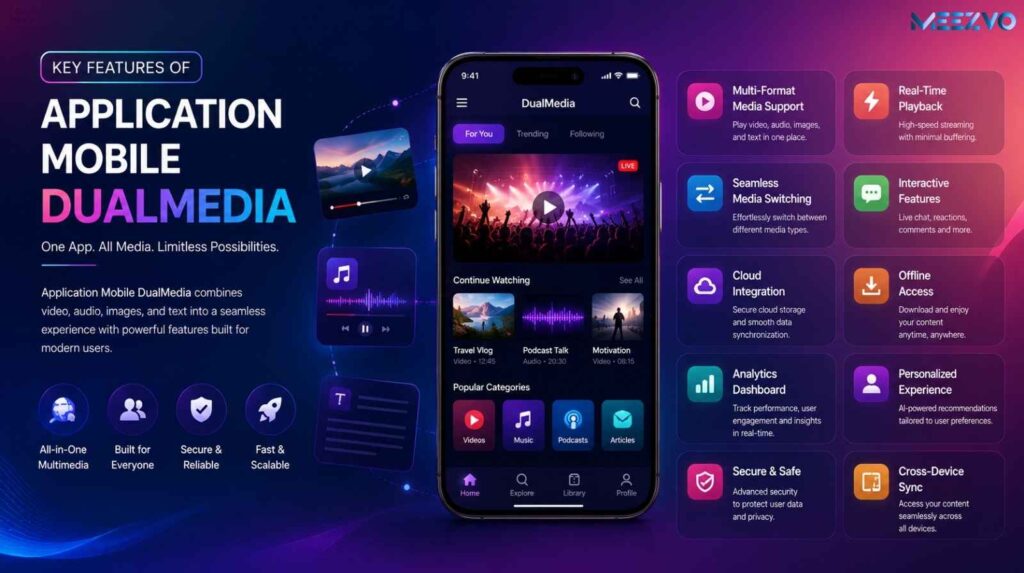
- Multimedia support across all major formats
- Smooth switching between media types
- Offline access for downloaded content
- Real-time playback with minimal buffering
- Cloud integration for scalability
- AI-based personalization
- Cross-device syncing
- Interactive tools like chat and reactions
Feature Breakdown Table
| Feature | Why It Matters |
|---|---|
| Offline Mode | Keeps users engaged without internet |
| Real-Time Playback | Improves experience |
| Cloud Integration | Enables scaling |
| Interactive Features | Boosts user engagement |
| Personalization | Increases retention |
Benefits of Using Application Mobile DualMedia
Let’s keep it real. Businesses don’t adopt technology for fun. They adopt it for results.
Major Advantages
- Higher user retention
- Better engagement rates
- Increased monetization options
- Reduced app-switching frustration
- Improved accessibility
Quick Example
A fitness app using multimedia content:
- Video workouts
- Audio coaching
- Progress tracking
Users stay longer. They interact more. They pay more.
Simple.
Real-World Use Cases Across Industries
This is where things get interesting. Application mobile dualmedia isn’t limited to one industry.
Entertainment & Streaming
- Video + podcasts
- Live shows with chat
- Personalized playlists
The music industry thrives here. Artists rely on:
- Streaming platforms
- Global audiences
- Real-time fan interaction
E-Learning Platforms
Modern education uses:
- Video lectures
- Audio explanations
- Interactive quizzes
This creates a full immersive experience.
Healthcare Apps
Doctors now use apps for:
- Video consultations
- Audio prescriptions
- Patient records
Everything stays in one place.
Social Media Platforms
Social apps evolved fast.
They now include:
- Short videos
- Voice chats
- Messaging
This boosts audience involvement massively.
E-Commerce Platforms
Shopping apps now include:
- Product videos
- Reviews
- Live selling
That creates stronger buying decisions.
Step-by-Step Development Process of Application Mobile DualMedia
Building one of these apps isn’t simple. It requires careful planning.
Requirement Analysis
Start here. Always.
Define:
- Target audience
- Media types
- Core features
Planning and Architecture
Choose your tech stack carefully.
Options include:
- Native (Android, iOS)
- Cross-platform frameworks
UI/UX Design
Design matters more than you think.
A cluttered interface kills user experience.
Focus on:
- Clean layouts
- Easy navigation
- Fast media switching
Development Phase
This includes:
- Backend development
- API integration
- Media engine setup
Testing and Optimization
Never skip this step.
Test for:
- Performance
- Device compatibility
- Bugs
Deployment and Maintenance
After launch:
- Monitor analytics
- Fix issues
- Roll out updates
Technology Stack for Application Mobile DualMedia
Here’s what developers actually use.
Frontend Technologies
- Flutter
- React Native
- Swift
- Kotlin
Backend Technologies
- Node.js
- Django
- Firebase
Streaming Technologies
- WebRTC
- HLS
Database Systems
- MongoDB
- PostgreSQL
Cloud Platforms
- AWS
- Google Cloud
Common Challenges in Multimedia App Development
Nothing worth building is easy.
Here are the real problems developers face:
Performance Issues
Large media files slow everything down.
Device Compatibility
Not all devices behave the same.
Bandwidth Consumption
Streaming uses a lot of data.
Storage Costs
Media takes space. A lot of it.
Security Risks
Protecting user data is critical.
Best Practices for Building High-Performance Apps
Want your app to succeed? Follow these.
Optimization Tips
- Compress media files
- Use adaptive streaming
- Implement caching
- Minimize loading time
Design Tips
- Keep UI simple
- Avoid clutter
- Focus on speed
Cost Breakdown of Building a DualMedia App
Let’s talk numbers.
Estimated Costs
| App Type | Cost Range |
|---|---|
| MVP | $15,000 – $50,000 |
| Mid-Level App | $50,000 – $150,000 |
| Enterprise App | $150,000+ |
Cost Factors
- Features
- Tech stack
- Development team
- Maintenance
Future of Application Mobile DualMedia
The future looks powerful.
Key Trends
- AI-driven personalization
- AR and VR integration
- Voice-based interfaces
- Faster streaming with 5G
Prediction: In the next five years, most apps will become media-rich mobile apps by default.
Who Should Build a DualMedia App
Not every business needs this.
But many do.
Best Fit
- Startups
- Content platforms
- E-learning businesses
- Streaming services
When to Avoid
- Simple utility apps
- Low-budget projects
FAQs
What is application mobile dualmedia used for?
It’s used to deliver multimedia content like video, audio, and text in one unified app.
Is it suitable for businesses?
Yes. Especially for platforms focused on user engagement and content delivery.
What technologies are used?
Common tools include:
- Flutter
- Node.js
- WebRTC
- Cloud platforms
Can these apps work offline?
Yes. Many support offline access through downloads and caching.
What is the future of multimedia mobile applications?
They will become more interactive, AI-driven, and immersive.
Conclusion
Users don’t want complexity. They want simplicity.
They want everything in one place.
That’s why application mobile dualmedia is growing fast.
It combines:
- Convenience
- Performance
- Engagement
In one powerful system.
If you’re building a modern app, this isn’t optional anymore.
It’s the standard.
Bottom line: Build smarter. Build integrated. Build for how people actually use apps today.
Read more knowledgeable blogs on meezvo.com

Ruby Brabyn is an expert blogger exploring meanings, decoding words, concepts, and language to deliver clear, insightful explanations that make understanding ideas simple and engaging.