
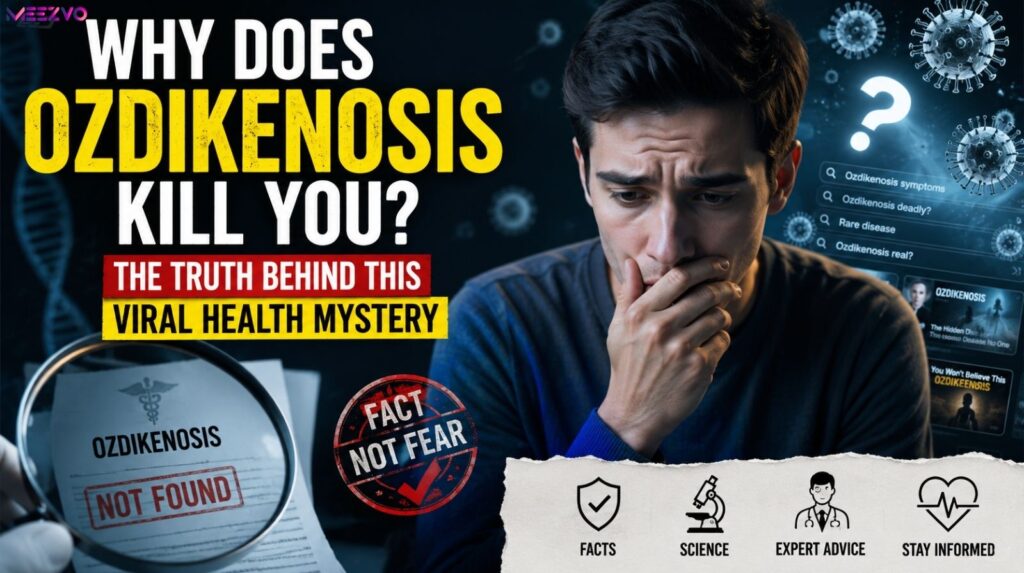
You type a strange term into Google. Within seconds, your pulse picks up. The words feel clinical. Serious. Dangerous. Suddenly, you’re asking yourself: why does ozdikenosis kill you?
It sounds like a fatal illness. It feels urgent. And yet something doesn’t quite add up.
Here’s the truth most articles won’t tell you clearly: the real danger isn’t a hidden disease. It’s the confusion, the online fear, and the wave of health misinformation surrounding it.
Let’s break this down properly. No fluff. No scare tactics. Just real, grounded medical science and clear answers you can trust.
What Is Ozdikenosis? A Reality Check You Need First
Let’s get straight to the point.
There is no medically recognized condition called ozdikenosis disease.
You won’t find it in:
- Any clinical research database
- Any official disease registry
- Any healthcare validation system worldwide
That means no medical recognition, no verified condition, and no authentic disease backing it.
So why does it sound so real?
Because the word follows a familiar pattern. The suffix “-osis” appears in many legitimate conditions like fibrosis or tuberculosis. Your brain connects the dots instantly. It feels like a legitimate illness, even when it isn’t.
This is how false health claims gain traction. They borrow the language of medicine to create instant credibility.
And once that happens, the internet does the rest.
Why Does “Ozdikenosis” Feel So Convincing Online?
If something isn’t real, why are so many people searching for it?
The answer lies in human psychology and how the internet amplifies it.
Fear Travels Faster Than Facts
When you see alarming headlines, your brain reacts before logic kicks in. It’s a survival instinct. You want answers now.
That’s exactly how fear-based searches begin.
A single post or blog can spark:
- Internet panic
- Rapid sharing
- Emotional reactions
Soon, it turns into a loop of viral anxiety.
The Illusion of Authority
Many online articles use medical-sounding language without real evidence. They mention:
- vague symptoms
- dramatic outcomes
- unverified claims
To the average reader, it feels legitimate. But there’s no scientific proof behind it.
This is classic digital misinformation at work.
The Echo Chamber Effect
One blog copies another. Forums repeat the same claims. Social platforms amplify the noise.
Before you know it, a fake disease starts to look like a widely accepted fact.
That’s how online myths evolve into something people genuinely fear.
Why Does Ozdikenosis Kill You? The Real Answer
Here’s the honest answer:
It doesn’t.
Because it doesn’t exist.
But that doesn’t mean your concern is wrong. The fear behind the question is real. And it often comes from not fully understanding how severe illness actually affects the body.
So instead of dismissing the question, let’s answer the deeper one:
What actually causes a disease to become fatal?
What Actually Makes a Disease Fatal? (Real Medical Science)
This is where things shift from speculation to reality.
A real dangerous condition becomes life-threatening when it disrupts essential body functions. Not suddenly. Not mysteriously. But through clear biological processes.
1. Organ Failure: When Systems Start Shutting Down
Most fatal diseases lead to organ failure.
Think of your body as a network. Your heart pumps blood. Your lungs deliver oxygen. Your kidneys filter waste.
If one system fails, others follow.
For example:
- Heart complications reduce blood flow
- Respiratory failure cuts oxygen supply
- Kidney failure allows toxins to build up
This chain reaction creates a critical condition.
2. Severe Infection and Immune Overload
Some illnesses trigger extreme immune responses.
In cases like sepsis, the body overreacts to infection. Instead of protecting you, it causes widespread damage.
This can lead to:
- Severe infection spreading through the bloodstream
- Tissue damage
- Multi-organ collapse
These are fatal complications and they are well documented in clinical research.
3. Oxygen Deprivation and Body Dysfunction
Your cells need oxygen to survive. Without it, they begin to die quickly.
Conditions that affect breathing can cause:
- Respiratory failure
- Brain damage
- Loss of consciousness
This level of body dysfunction becomes life-threatening fast.
4. Progressive Breakdown Over Time
Not all established illness cases act quickly.
Some diseases slowly damage the body:
- Neurodegenerative disorders
- Chronic organ diseases
- Untreated infections
Over time, they reach a tipping point.
That’s when a verified disease becomes fatal.
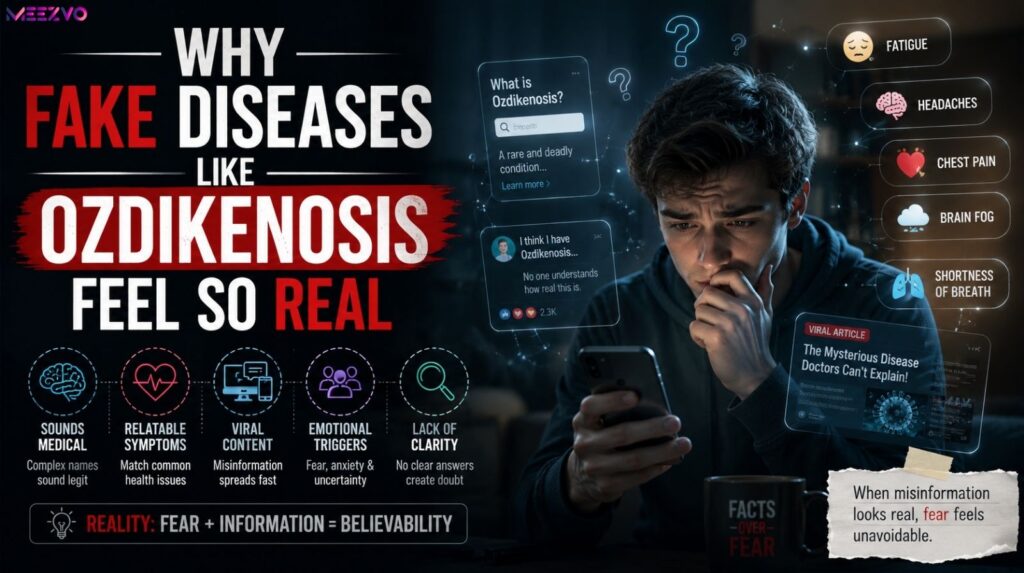
Why Fake Diseases Like Ozdikenosis Feel So Real
Here’s where things get tricky.
Many symptoms mentioned in misleading content are actually real:
- fatigue
- chest pain
- breathing difficulty
- brain fog
These symptoms overlap with many legitimate illness conditions.
So when people read about a mysterious disease, they start connecting personal experiences to it.
That creates:
- Illness fear
- Medical worries
- Emotional attachment to the idea
Suddenly, a fake disease feels personal.
The Hidden Danger of Searching the Wrong Condition
This is where things become serious.
Not because of ozdikenosis disease itself but because of what it leads people to do.
Delayed Diagnosis of Real Conditions
When people fixate on a false condition, they often ignore real symptoms.
Instead of seeking medical care, they:
- self-diagnose incorrectly
- rely on unreliable sources
This delay can turn a manageable issue into a critical condition.
Anxiety That Feels Physical
Panic searching doesn’t just affect your thoughts. It affects your body.
You might experience:
- rapid heartbeat
- shortness of breath
- dizziness
These are real stress symptoms, triggered by emotional distress.
Ironically, they can mimic life-threatening symptoms, which increases fear even more.
Information Overload and Confusion
The internet isn’t filtered for accuracy.
You’ll find:
- misleading health terms
- exaggerated risks
- conflicting advice
Without factual data, it becomes nearly impossible to separate truth from fiction.
Could Ozdikenosis Be Confused With a Real Disease?
Yes and that’s an important point.
Some real conditions share vague, overlapping symptoms.
Here’s a simple comparison:
| Symptom | Possible Real Cause |
|---|---|
| Fatigue | Anemia, thyroid disorders |
| Chest pain | Heart disease, anxiety |
| Breathing issues | Asthma, lung infections |
| Brain fog | Stress, neurological conditions |
These are all part of established illness categories backed by clinical diagnosis and expert findings.
But none of them connect to ozdikenosis disease.
The confusion comes from symptom overlap not from a hidden or undiscovered condition.
What You Should Do Instead (Practical, Real Guidance)
If you’ve searched why does ozdikenosis kill you, take a breath. You’re not alone.
But here’s what actually helps.
Focus on Symptoms, Not Random Disease Names
Your body communicates through symptoms. Pay attention to those instead of chasing unknown terms.
Seek a Professional Opinion Early
A doctor consultation can save time, stress, and risk.
A licensed doctor or healthcare expert will:
- evaluate your symptoms
- provide an official diagnosis
- guide patient treatment properly
Use Verified Sources Only
Stick to platforms with:
- clinical support
- peer-reviewed data
- recognized medical backing
Avoid blogs that rely on speculation.
Don’t Let Fear Control Your Search
Curiosity is normal. But fear-based searches often lead you down the wrong path.
Replace panic with informed action.
Why Terms Like Ozdikenosis Go Viral
Let’s be honest this isn’t random.
Content creators know exactly what grabs attention:
- mystery
- fear
- urgency
Combine those with trending topics, and you get instant traction.
That’s how:
- social media buzz spreads quickly
- internet discussions spiral
- viral rumors gain credibility
The goal isn’t always accuracy. It’s engagement.
And unfortunately, that fuels online myths.
Final Verdict: Does Ozdikenosis Kill You?
No.
Because it isn’t real.
There is no verified condition, no clinical diagnosis, and no healthcare facts supporting its existence.
But the question itself reveals something important.
People aren’t just searching for a disease. They’re searching for certainty. For answers. For reassurance.
And that’s where real medical science matters.
FAQ: Clearing Up the Most Common Questions
Is ozdikenosis a real disease?
No. It is a non-recognized illness with no medical recognition.
Why does it sound so real?
Because it uses medical-style language that mimics authentic disease names.
Can a disease like this exist?
Only if supported by clinical research and healthcare validation, which this is not.
What should you do if you feel symptoms?
Consult a medical professional immediately for proper evaluation.
Should you worry after searching it?
No but you should rely on verified information moving forward.
A Final Thought That Actually Matters
The internet can inform you. It can also mislead you.
When it comes to health, the difference matters more than anything else.
So the next time you see a strange term like ozdikenosis disease, pause.
Ask yourself one simple question:
Is this backed by real science or just fear?
That one habit can protect you from confusion, anxiety, and unnecessary worry.
And more importantly, it can lead you to the answers that actually matter.
Read more knowledgeable blogs on meezvo.com

Ruby Brabyn is an expert blogger exploring meanings, decoding words, concepts, and language to deliver clear, insightful explanations that make understanding ideas simple and engaging.